Everyone is talking about AI. Far fewer people are asking the question that matters most: do we have the culture to navigate ethically in uncertain times?
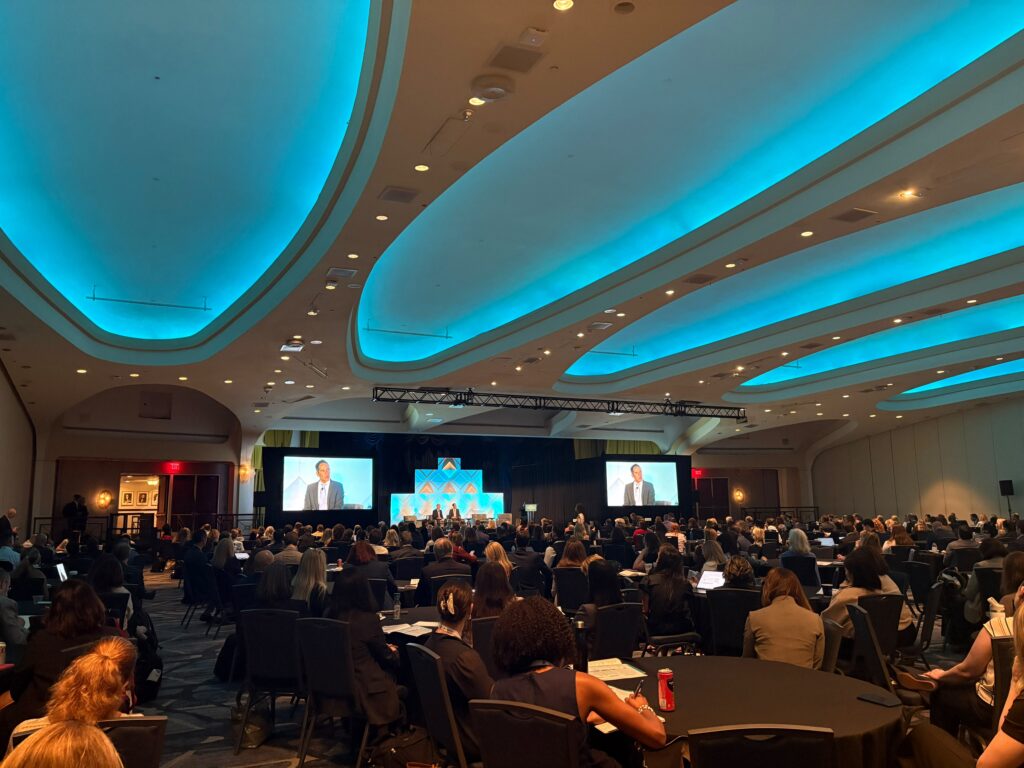
At the 27th Annual Pharmaceutical and Medical Device Ethics and Compliance Congress (Washington, DC, October 13–16, 2026), more than 30 sessions were dedicated to AI in compliance. They covered six areas:
- Governance
- How to identify risk more easily
- How to improve investigations with AI tools
- How to put monitoring at your fingertips
- How to manage hotline outcomes
- How the OIG and DOJ are using AI to detect fraud
What stood out was not any single session. It was how consistent the message was. Speakers from companies, law firms and government were saying the same thing, with nuances. Below are the main messages I took home, and the questions I would love to discuss with you.
1. Governance: the plane is flying, and the governance is not
AI is already in use across our companies, often before any policy exists. Legal and compliance professionals have the responsibility to build governance as we go. We cannot wait for a finished rulebook.
Culture is key. This was the point I heard most often, and the one I believe matters most. If you do not have a strong ethical culture, AI will make issues explode exponentially. People will use the tools in ways you did not prepare for, faster and at greater scale than before.
Compliance leaders must understand AI. You do not need to be an engineer. But you do need to understand enough to ask the right questions, and to build resilience in the areas where the rules are not written yet.
Enterprise, not silos. Compliance should help the company prove it has an enterprise AI solution, governed as a whole, rather than separate tools in each function with separate risks.
The positive side: companies with a strong speak-up culture and clear values are in the best position. Their people already know how to make the right call when nobody has written the rule.
2. Identifying risk: it is not just asking GPT a question
Identifying risk with AI is not as easy as typing a query into a chatbot and reading the answer. To design and build a useful tool, you first need to understand exactly what you are looking for.
Even then, you must test the tool for hallucinations before it goes live and starts flagging anything. Otherwise you will be chasing problems that do not exist.
And be ready: the workload will be higher, not lower. A good tool finds more, both true hits and false positives. Human oversight is what proves that your findings are real and not just bogus alerts.
3. Investigations: faster reviews, but who asks the questions?
AI can streamline a lot of investigative work: document review, preparing interviews, organising evidence and summarising findings.
One feature presented was AI agents that conduct the interviews themselves. It is impressive technology, but it was the most controversial topic of the week. Because of privilege and privacy concerns, more people in the room were against it than in favour.
What do you think? Would you let an AI agent interview an employee in an investigation? Please share your view in the comments.
4. Monitoring at your fingertips, if you are ready for the hits
The same lesson applies to monitoring. After an AI agent is deployed, you will have to manage more hits than before. If your team is not ready to review them and act, deploying it may not be a wise decision yet.
With the right support behind them, these tools can be wonderful, especially in a period of reduced headcount. The key is to plan the people and the process before you switch the tool on.
5. Hotline: a clearer picture across countries
Hotline data can now be analysed much better. If you oversee multiple countries, AI helps you see a clearer picture of trends, hot spots and repeat issues that are hard to spot one report at a time. That makes it easier to act early and to show your board where culture needs support.
6. OIG and DOJ: the enforcers are already using AI
This was the most important message of the congress. Both the OIG and the DOJ, on the civil and criminal sides, are actively using AI tools now. Speakers from the DOJ included Brenna Jenny, MPH, Deputy Assistant Attorney General, and Jacob Foster, JD, of the Health Care Fraud Unit.
Anti-fraud in Medicare and Medicaid is the top priority. Fraud in medical claims is one of this administration’s highest priorities. Speakers said around US$10 billion in fraud has been caught. The June 2026 National Health Care Fraud Takedown alone charged 455 defendants in schemes worth more than US$6.5 billion, driven by advanced data analytics and interagency data sharing (Benesch). The administration also announced a US$1 million award for whistleblowers who report a confirmed fraud case.
Sunshine Act data is being checked. Enforcement is using AI to analyse Open Payments data. That makes it possible to spot the “eternal” speaker events, lavish hospitality, and donations linked to patient support programs. If you are running speaker meetings left and right and feel nobody is watching, they are. Speakers said five pharma and medical device companies have already been caught, with very hefty fines.
The focus is broadening. Domestic anti-fraud is the current focus, but enforcement is moving into other areas too. So do not stop overseeing them. The DOJ’s loud recommendation was to keep monitoring kickback risk, especially in:
- Pharmacies
- Patient assistance and patient support programs
- Advisory boards
- Consultancy arrangements
- New this year: market access
My takeaway: AI is the tool, culture is the compass
AI will not make compliance lighter. It will make it more visible, faster and more demanding. That is good news for organisations with a strong ethical culture, because AI helps them do the right thing faster.
Before you deploy your next AI tool, ask your team five questions:
- ☐ Is our ethical culture strong enough to handle what AI will surface?
- ☐ Do we have governance for AI across the whole enterprise, not in silos?
- ☐ Do we know what we are looking for, and have we tested the tool for hallucinations?
- ☐ Do we have the people and the human oversight to manage more hits?
- ☐ Are we monitoring the areas regulators already analyse: speaker programs, hospitality, patient support, pharmacies, ad boards, consultancy and market access?
Join the conversation
I would love to hear your view in the comments:
- Would you let AI agents conduct investigation interviews? Why or why not?
- Which AI use case is your team prioritising: risk, monitoring, investigations or hotline?
- How are you preparing your culture, not just your tools, for AI?
Be Your LEADER.

0 Comments